Understanding lab reports
A lab report shows the results of a blood test — most importantly your phenylalanine (Phe) level. Learning to read it helps you understand how well your diet is keeping your levels in the target range.
What the numbers mean
- Phe level — the amount of phenylalanine measured in your blood, usually in µmol/L. Your care team sets a personal target range for you.
- Sample date — when the blood was taken. Levels are only meaningful alongside the date, because they change over time.
- Reference range — the range your care team is aiming for. A value inside this range is on target; a value above it means your Phe was higher than desired around the sample date.

Reading a single result
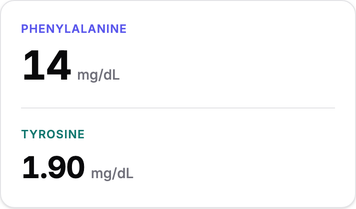
- Find the Phe value and its unit.
- Compare it against your target range.
- Look at the sample date so you know which day the value reflects.
If a value is outside your range, it does not mean something is wrong right now — it is a snapshot from one day. Talk it through with your care team, who look at the trend over many samples rather than any single point.
Getting help
If a report is confusing or a value surprises you, message your care team through phenyx. They can explain what a result means for your situation.